No jargon. No sales pitch. Just the knowledge you need to understand photovoltaics, Polish subsidies, and what panels actually mean for your electricity bill.
From sunlight to socket, without the physics degree.
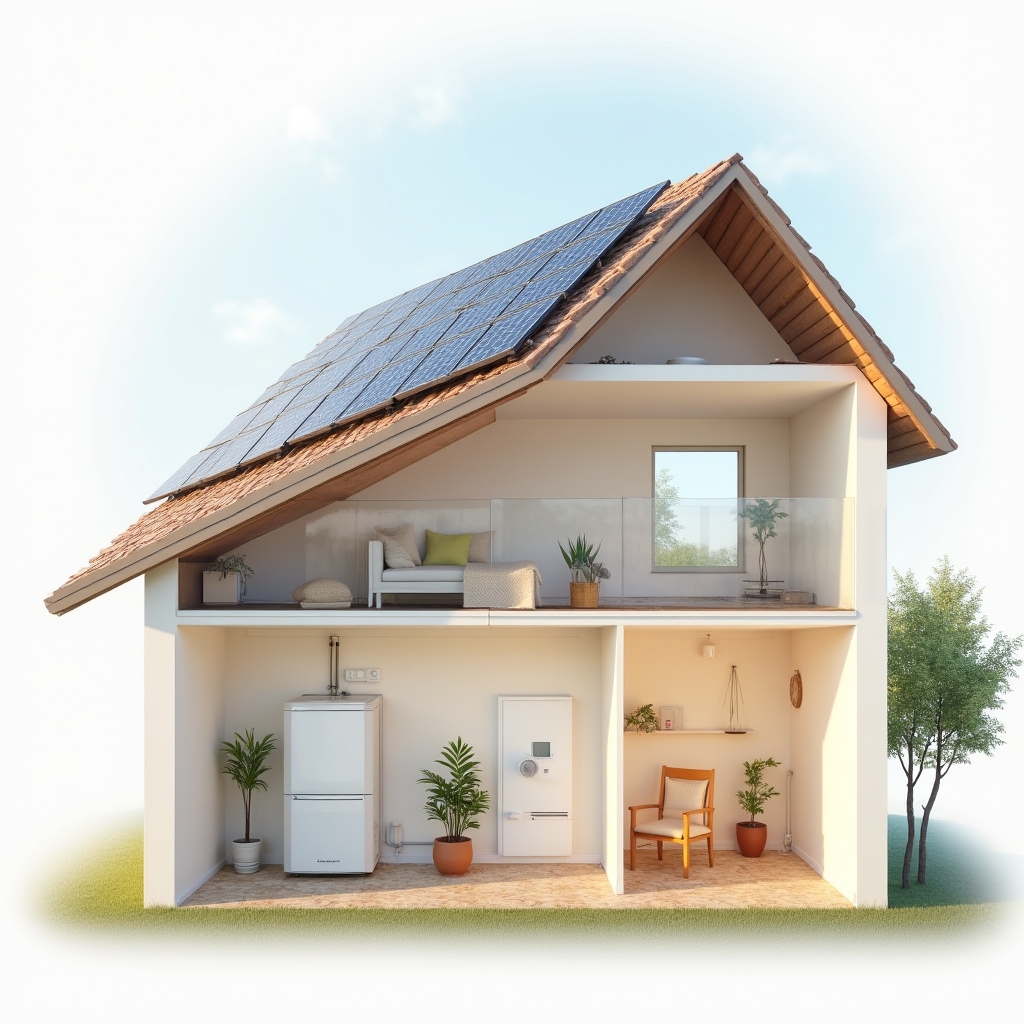
A photovoltaic cell is made of silicon. When photons from sunlight hit the cell, they knock electrons loose. Those electrons flow as direct current (DC). Simple. The cell itself has no moving parts and no fuel.
A solar panel is a collection of these cells laminated together under glass. Most residential panels today contain 60 or 72 cells and produce between 350 and 450 watts each in standard test conditions.
Your home appliances run on alternating current (AC). The inverter converts DC from the panels into usable AC. It is the brain of your system, tracking voltage and protecting the grid connection.
Most Polish residential installations remain grid-connected. Surplus energy flows back to the distribution network. At night or on cloudy days, you draw from the grid as normal. Batteries are optional, not required.
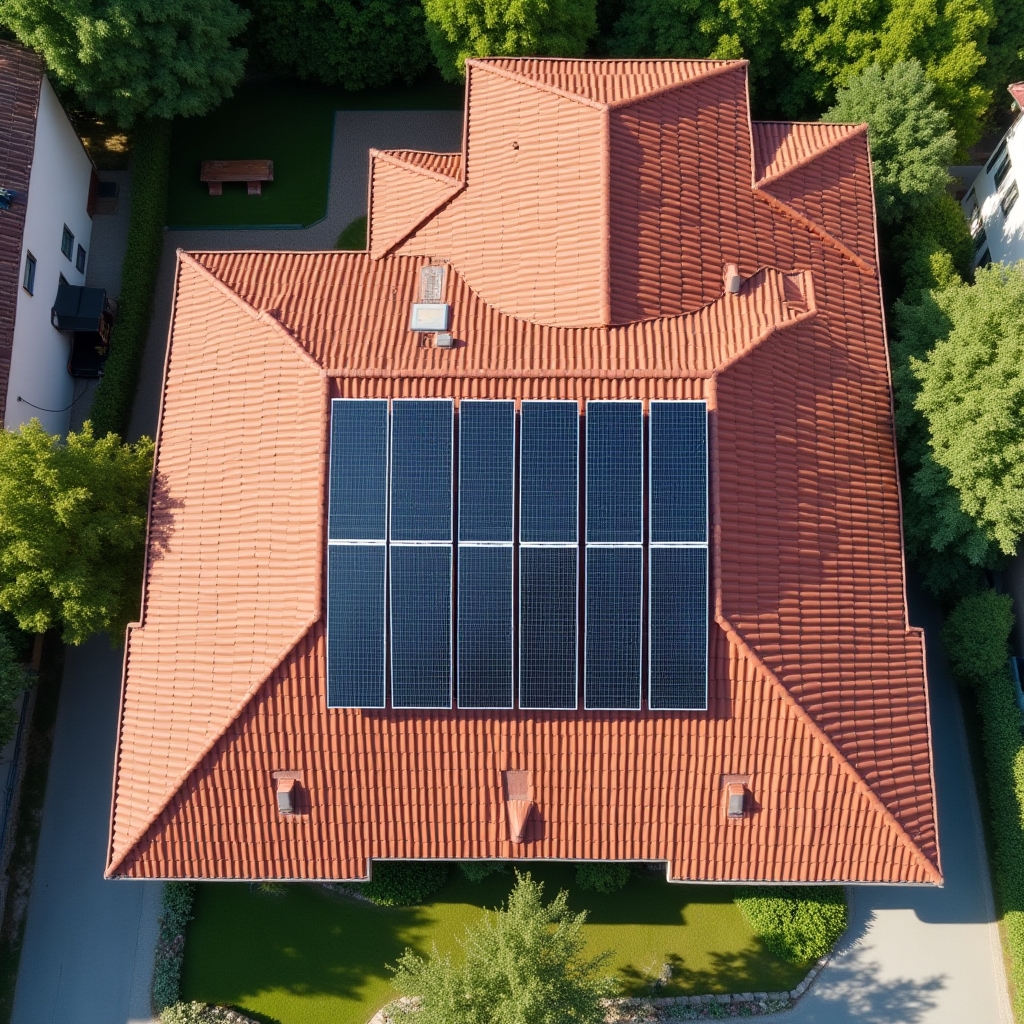
Roof angle and orientation matter. South-facing roofs at 30-35° tilt capture the most annual irradiation in Poland. East-west installations produce somewhat less peak power but spread generation more evenly across the day, which can suit households with daytime consumption. Shade from chimneys or trees reduces output significantly, particularly on older string inverters where one shaded panel can affect the whole string.
Poland's main residential PV subsidy, administered by the National Fund for Environmental Protection and Water Management.
Mój Prąd is a co-financing scheme run by NFOŚiGW (the National Fund for Environmental Protection and Water Management). It provides non-refundable grants toward the purchase and installation of photovoltaic micro-installations for households. The programme has run through multiple editions, each with updated eligibility rules and grant amounts. Always verify current edition details directly at nfosigw.gov.pl, as conditions change between rounds.
Applicants are typically individuals who own or co-own the property where the installation takes place. The PV micro-installation must be connected to the grid and the prosumer must have a net-billing agreement with their energy distributor. The installation must be completed and commissioned before submitting the application. Combining Mój Prąd with other national co-financing for the same component is generally not permitted, though regional programmes may apply to different elements of the system.
From edition 4 onward, NFOŚiGW broadened co-financing to include home energy storage (batteries), heat pumps, and EV charging points alongside the basic PV grant. Each supplementary component has its own co-financing ceiling and conditions. This reflects a shift toward whole-house energy independence rather than just panel installation. The grant for PV alone is lower if you do not add supplementary components in editions that incentivise the bundled approach. Check the current prospectus on the NFOŚiGW website for exact figures, as these change with each edition.
Applications are submitted online through the GWD portal (Generator Wniosków Dotacyjnych). You will need the installation invoice, proof of grid connection, and the prosumer agreement from your energy distributor. The fund reviews submissions and pays grants directly to applicants. Processing times vary by edition and application volume.
Official programme details are published at nfosigw.gov.pl. This page summarises publicly available guidelines for educational purposes only.
Understanding the change that affects every prosumer's electricity bill.
Under net-metering, prosumers operated on a barter system. For every kilowatt-hour sent to the grid, you could retrieve a fixed ratio back: 0.8 kWh for installations up to 10 kW, or 0.7 kWh for larger ones. The grid acted like a free battery. Billing was straightforward: subtract what you retrieved from what you consumed.
The Renewable Energy Sources Act amendment introduced net-billing. Now, surplus energy exported to the grid is valued at the market price at the moment of export (the RCE rate published by URE). That value is credited to your prosumer account as PLN, not kWh. When you draw from the grid, you pay retail tariff prices, which include distribution fees and other charges the export value does not cover.
Sizing is about matching your consumption, not maximising panel count.
Divide your annual consumption (kWh) by the annual specific yield for your location (kWh per kWp). Poland's average specific yield is around 950-1,050 kWh/kWp depending on region. The result is the system size in kWp you need. Divide that by your chosen panel's wattage to get the panel count.
A standard Polish terraced or detached house with a pitched south-facing roof can typically accommodate 6 to 12 panels within the usable area. Each panel occupies roughly 1.7-1.8 m². Roof windows, chimneys, and ridge lines reduce the available run. A competent designer should produce a shading analysis before confirming layout.
Under net-metering, oversizing made sense since excess energy was stored as retrievable kWh. Under net-billing, surplus exported at low RCE rates provides less financial return. The optimal strategy under net-billing is to size for self-consumption and add storage if you want to capture more of your own generation.
Solar irradiation varies across Poland. Here's what that means for return on investment.
Southern Poland receives higher annual solar irradiation than the north. Małopolska, including Kraków and surroundings, benefits from longer effective sunshine hours particularly in summer. Horizontal irradiation data from PVGIS (the EU's photovoltaic geographical information system) shows southern regions can receive notably more annual energy per square metre than the national average.
For homeowners, this translates to more annual kWh generated per installed kWp. A system that generates more per panel reaches payback sooner, assuming consumption and tariff conditions are equal. Mountainous sub-regions can also have cleaner air, which reduces soiling losses on panels.
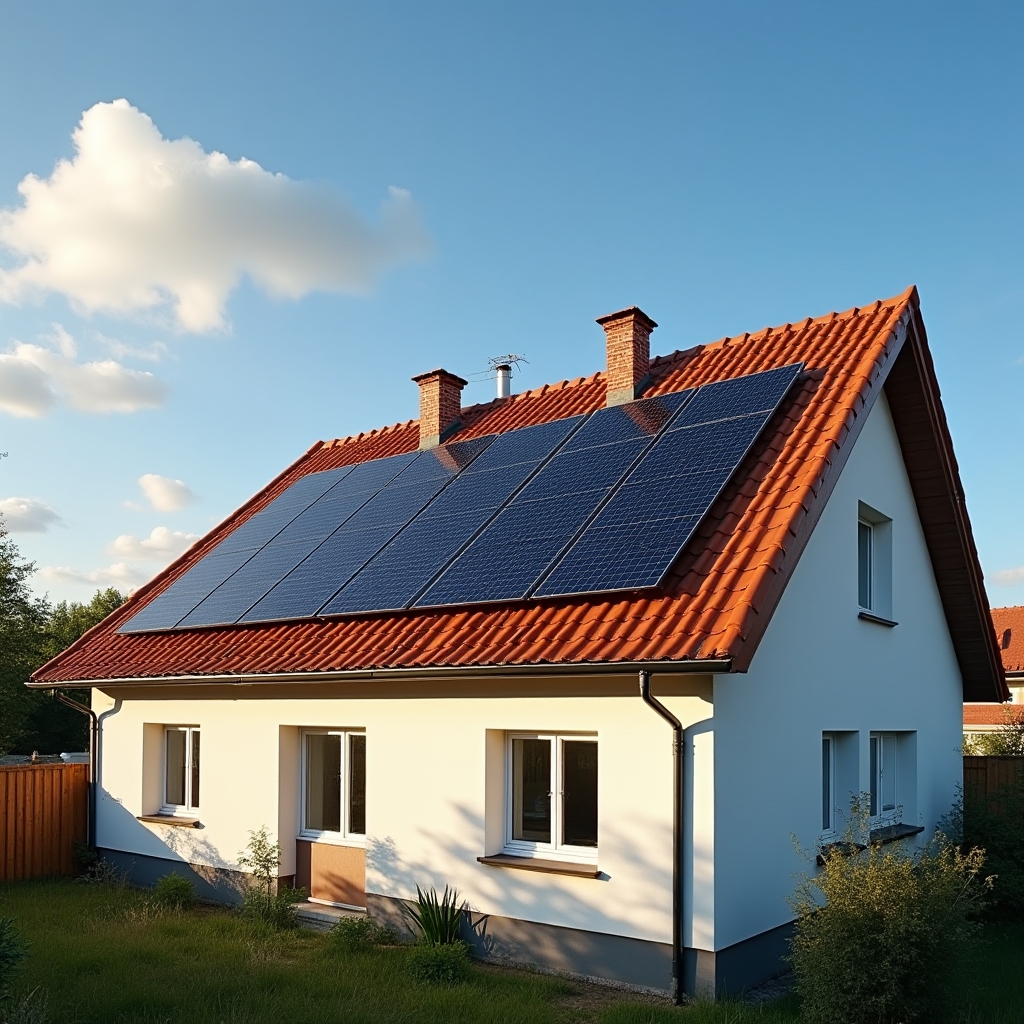
The Pomeranian coast receives somewhat less annual irradiation than southern regions. Higher cloud cover and the influence of the Baltic climate reduce the number of peak sun hours annually. PVGIS data places horizontal irradiation in Gdańsk and the Tricity area below the southern Poland average.
This does not make solar unviable in the north. Panels still generate meaningful energy throughout the year, and Polish electricity tariffs apply equally regardless of region. The payback period is typically somewhat longer in Pomorze than in Małopolska for an otherwise identical installation. Sizing and self-consumption optimisation become proportionally more important.
Higher retail prices increase the value of self-consumed solar energy. Tariff increases benefit existing installations more than irradiation differences between regions.
Using more of what you generate directly, rather than exporting, is the single most powerful lever under net-billing. Households with daytime consumption profiles benefit most.
Mój Prąd and any regional co-financing directly reduce the initial outlay and can shorten the payback period significantly regardless of location.
Modern panels are warranted for 25-30 years. ROI calculations should account for the full operational period, not just the first few years.
We explain the details, without the sales pressure. Reach out with any question about PV systems, subsidies, or billing in Poland.
Get in TouchWho we are, why we built this resource, and how we approach educational content on solar energy.
Read moreFree online sessions covering PV basics, Mój Prąd applications, and net-billing explained live.
View scheduleSend us your specific question about solar energy in Poland. We respond with educational information, not a sales call.
Contact us